ServicesLand Clearing
Land Clearing in Greer
We clear wooded and overgrown lots so the ground is ready for grading, a foundation and the custom home you plan to build. Trees you want kept stay protected, stumps come out where the house will sit, and we come back once the ground settles to check on the site.
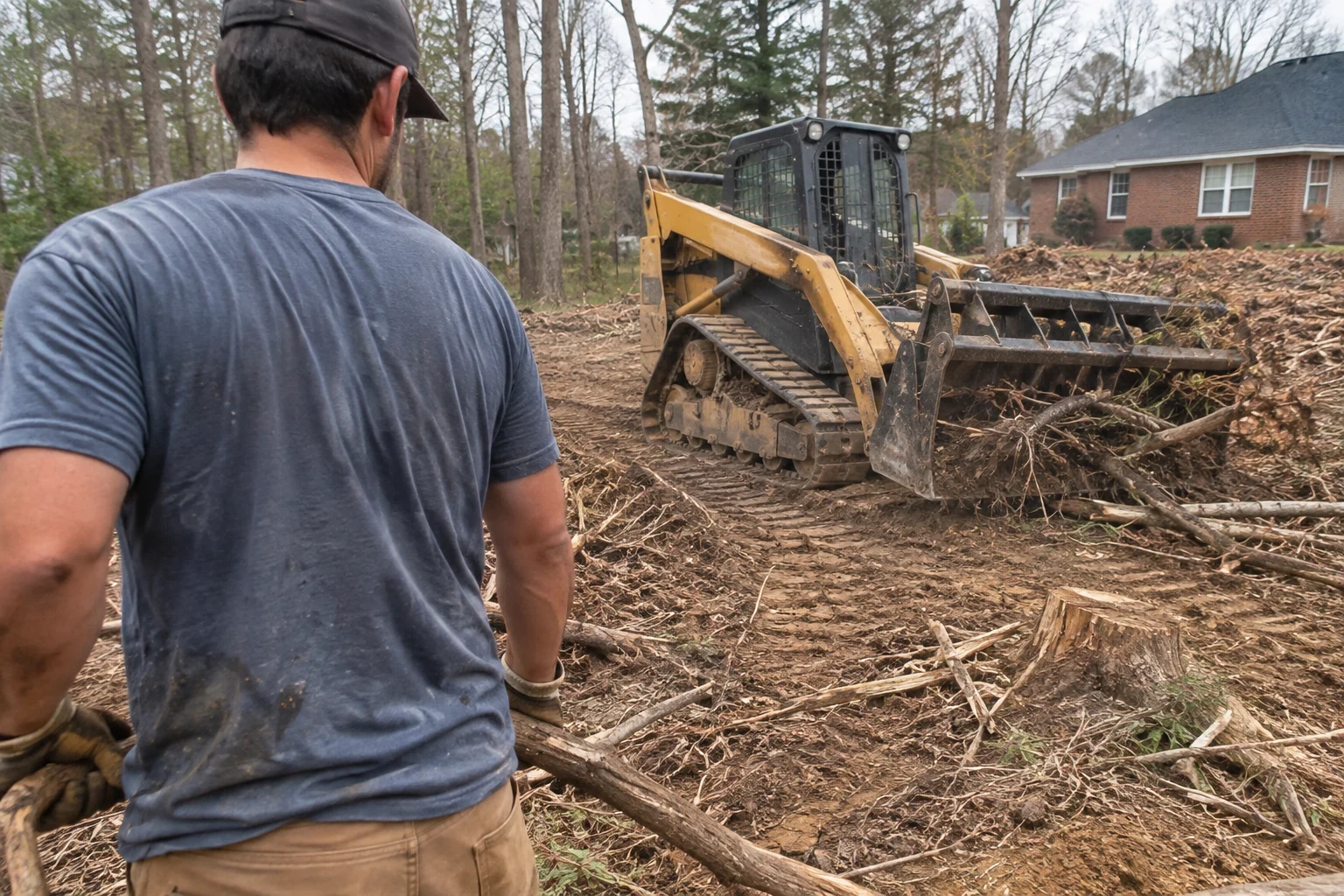
Clearing that starts with where the house will go
Land clearing is the first physical step of most builds, and it shapes everything that follows. We walk the lot with you before any equipment arrives, mark the house footprint, the driveway path and the trees worth saving, and then clear only what the build needs.
Under the footprint, stumps and roots come out completely, because buried wood rots and leaves voids under a slab or footings. Outside it, grinding stumps flush and mulching brush in place often makes more sense and leaves less bare soil to wash away.
When the machines leave, our part isn't finished. We come back after the first good rains to look at drainage and exposed soil, and we explain how to keep the cleared ground stable until grading and construction begin.
What our land clearing covers
Site walk and marking
We flag the clearing limits, the trees to keep and any wet or soft areas. You see the plan on the ground before anything is cut.
Tree and brush removal
Trees are felled toward open ground and away from anything you want protected. Undergrowth, vines and invasive shrubs are cleared or mulched depending on where they sit.
Stump and root removal
Inside the building and driveway areas, stumps are pulled and the root mass raked out. Elsewhere we can grind them below grade instead.
Debris handling
Logs, limbs and root balls are hauled off or mulched on site. Outdoor burning has its own local rules, so we confirm what applies to your property before choosing that route.
Erosion protection
Exposed red clay moves fast in a summer downpour, so we set silt fence or straw where runoff could leave the lot or reach a neighbor's yard.
Care notes for bare ground
You get a plain explanation of what to watch for on cleared soil, from rutting to new sprouts, and when to call us back.
Signs your lot needs clearing before you build
- You can't see the building site
- If the spot for the house is hidden behind trees and brush, a builder, surveyor or perc tester can't do accurate work yet.
- Overgrowth is taking over
- Privet, briars and kudzu spread quickly in this climate. Once they climb into trees they make any later work slower.
- Dead or leaning trees near the footprint
- Trees that are already failing are a risk to crews and to new framing. Removing them before construction is safer and simpler.
- Old debris on the property
- Buried fencing, scrap piles or old foundations often turn up on rural lots. They need to come out before grading and footings.
- A driveway path that doesn't exist yet
- Concrete trucks and lumber deliveries need a clear, firm route. If there is no way in, clearing comes first.
From first conversation to return visit
- 1
Phone consultation and site walk
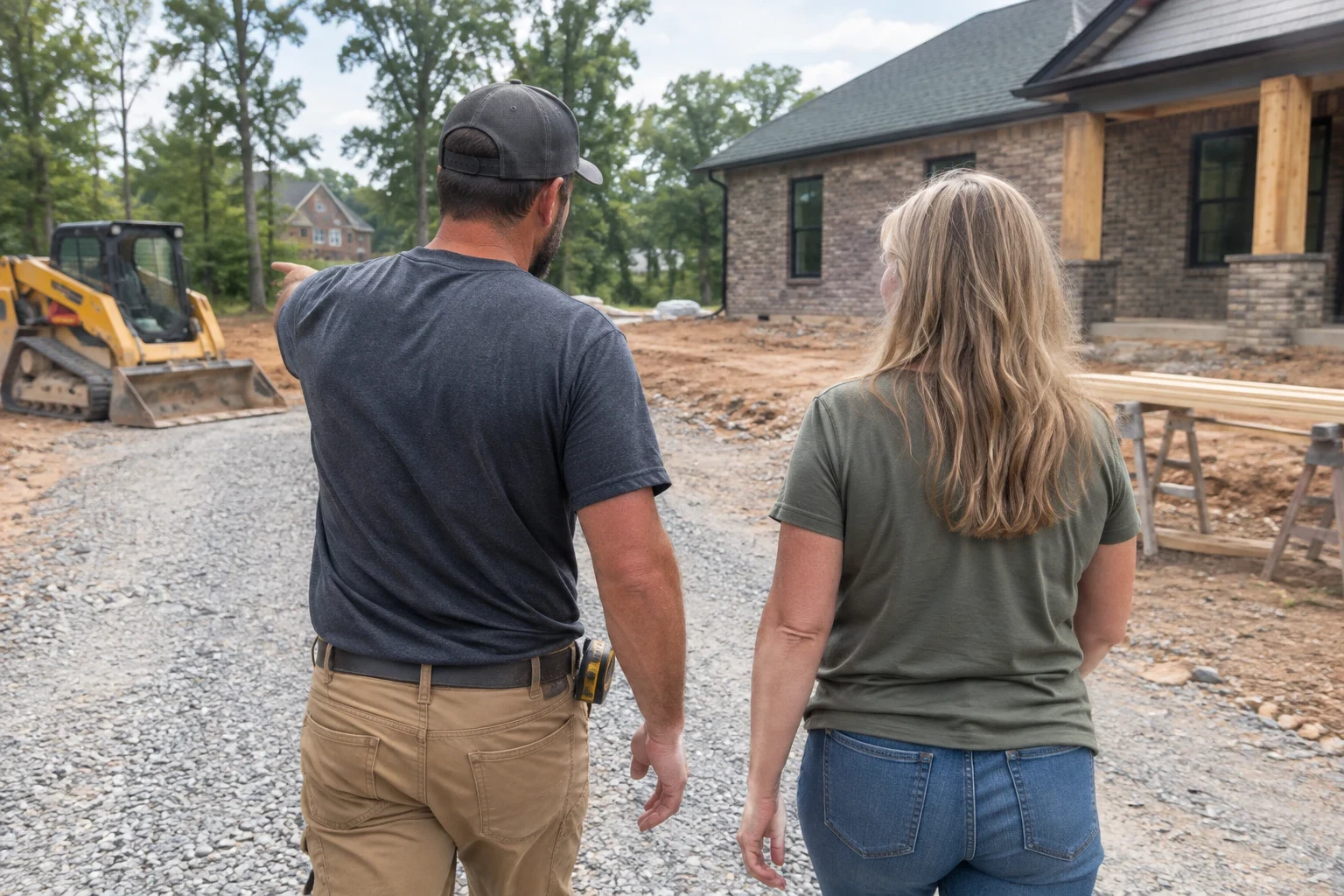
Your first call covers the house you have in mind and the shape of the property. On a later visit we walk the lot side by side, noting slope, soil type, how equipment will get in and which trees matter to you.
- 2
Locates and permits
Before a single stump is pulled, SC 811 marks any buried lines. When the disturbed area is big enough to trigger a land disturbance permit or an erosion control plan, we let you know early and take care of the parts that fall to us.
- 3
The clearing itself
Keeper trees get protective fencing before anything else. Cutting, stump pulling and debris work then move in a sequence that keeps machines away from the root zones you've chosen to save.
- 4
Leaving the site stable
The ground is left rough-level and clear of debris, with silt fence or straw wherever runoff could travel. From there the lot is ready for the grading crew.
- 5
The return visit
Once a heavy rain or two has passed, we come back to look for washouts, soft spots and regrowth. We show you what we found and what, if anything, should be done.
What shapes the cost of clearing a lot
No two lots clear the same way, so we price once we've seen the ground. Your estimate is written out line by line, so you can see what each part of the work involves and what you could adjust.
- Acreage and density
- A lightly wooded half-acre takes far less time than thick mixed hardwood and pine. The number and size of trees matter more than the lot size alone.
- Stump treatment
- Full removal with root raking costs more than grinding. We recommend full removal only where the house, driveway or septic field will go.
- Debris disposal
- Hauling everything off adds trucking and dump costs. Mulching on site or leaving cut logs for firewood can bring that down.
- Access and slope
- Steep ground, a narrow entrance or soft soil slows equipment and can call for smaller machines.
- Permits and erosion control
- Larger disturbed areas need more silt fence and sometimes a formal permit, which adds to the scope.
Land clearing questions
- Can you save certain trees while clearing the rest?
- Yes, and we encourage it. We mark the trees you want kept and fence their root zones so equipment stays off them. Roots usually spread well past the branch line, so we'll talk honestly about whether a tree close to the footprint can survive construction.
- Do you clear the whole lot or just the building area?
- Usually just what the build needs: the house footprint with working room, the driveway, utility runs and the septic area if there is one. Keeping the rest wooded saves money and holds the soil in place.
- What happens to the trees and brush you remove?
- It depends on the lot and your preference. We can haul it away, mulch it on site or cut usable logs and stack them for you. We'll explain the tradeoffs during the consultation.
- How soon can grading start after clearing?
- Grading can follow right away once the stumps are out and the debris is gone. We also handle grading and foundation work, so the handoff between stages stays simple.
- What should I watch for once the lot is cleared?
- Watch for gullies forming in storms, standing water and new sprouts from cut roots. Keep heavy traffic off soft ground when it's wet. We cover all of this at our return visit, and you can call us whenever something looks off.
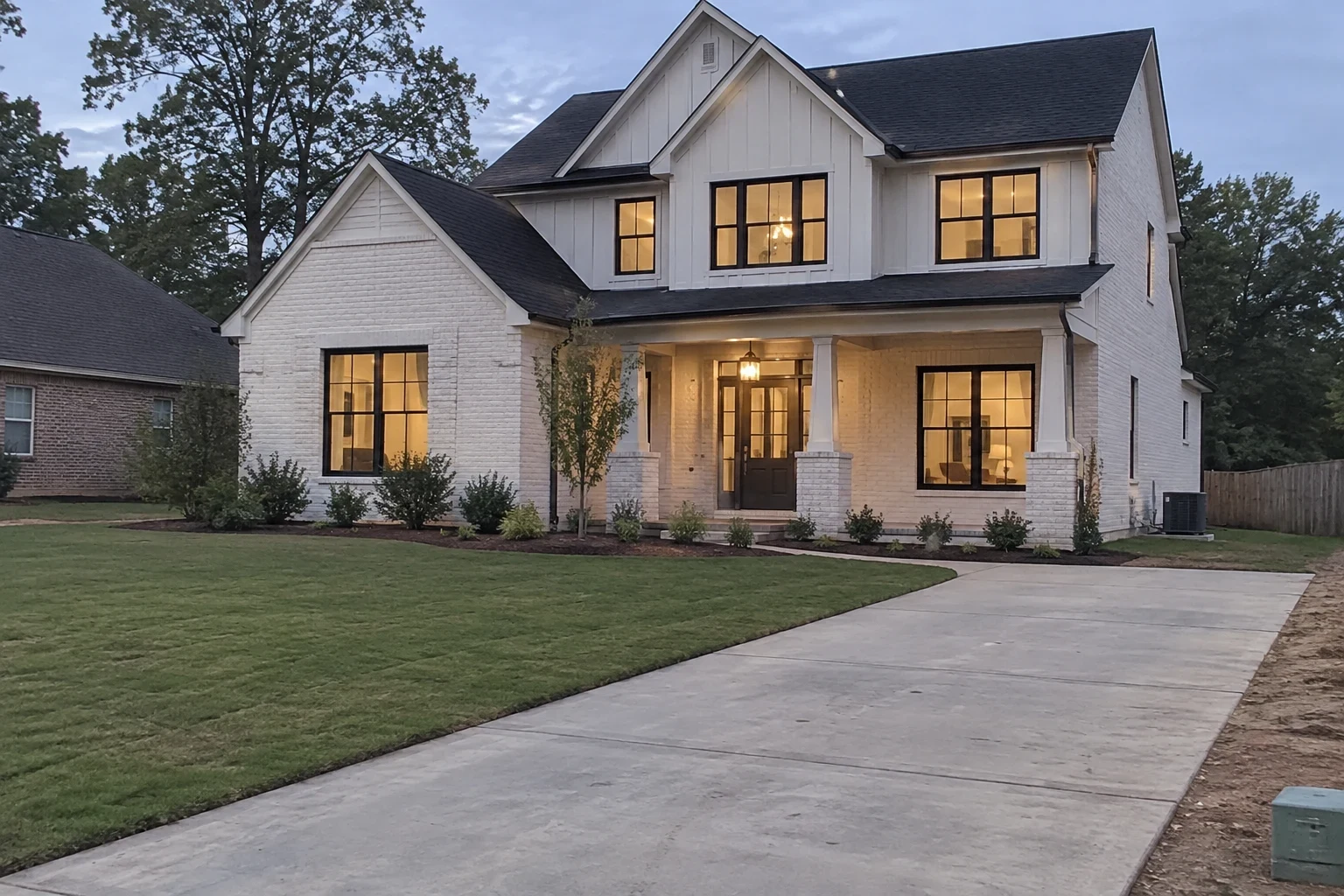
Ready to see your lot clearly
Tell us about your property and what you plan to build. We'll talk through the clearing, the trees worth keeping and what comes next.