ServicesSiding Installation
Siding Installation in Greer
We install fiber cement, vinyl and engineered wood siding over a properly prepared wall, with the flashing and trim details that keep water out. When the last board is up, we walk the house with you, explain how to care for it, and come back later to check it.
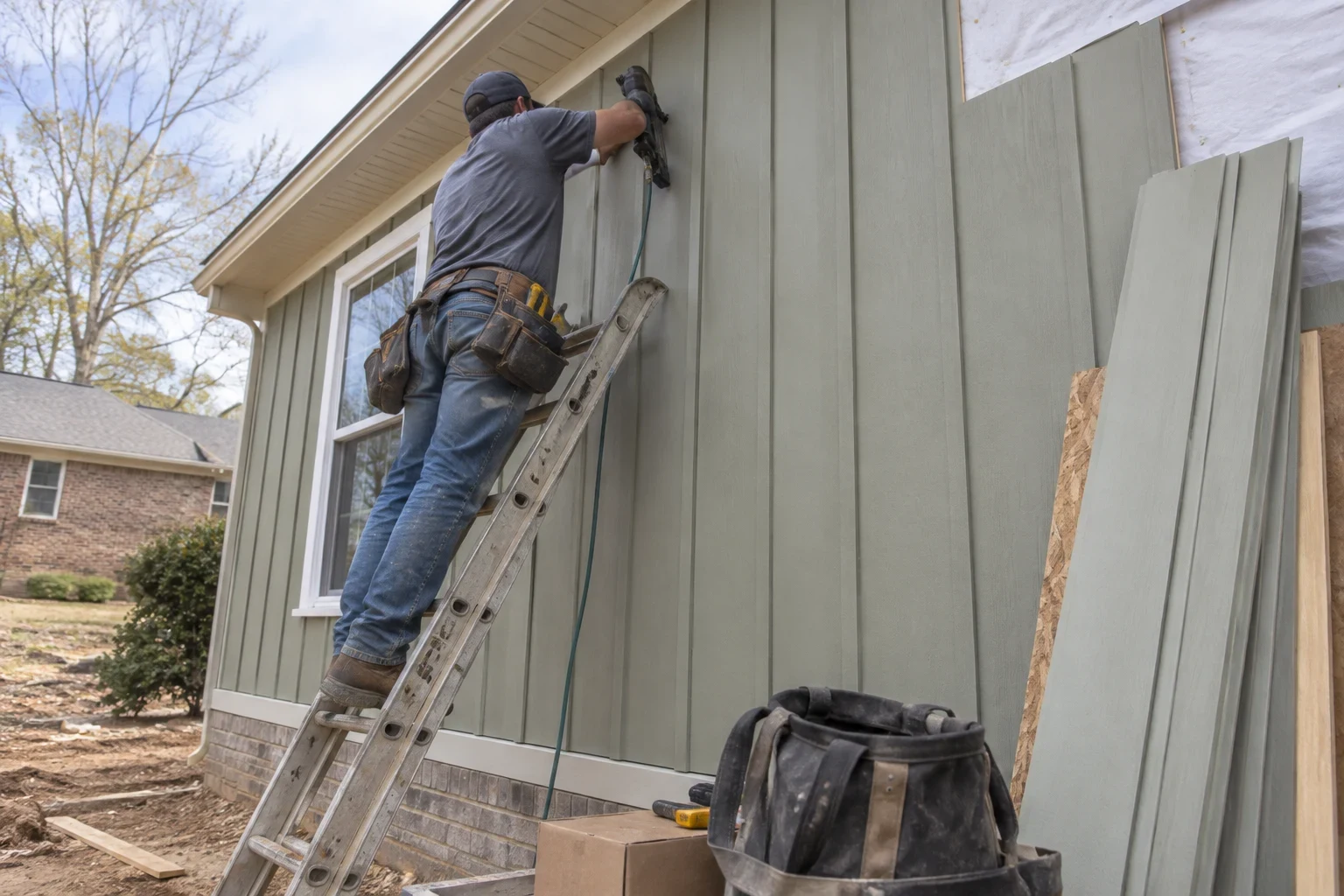
New siding is only as good as the wall behind it
Siding is the part of the house everyone sees, but its real job is shedding water. The boards you choose matter for looks and upkeep. The house wrap, window flashing and trim joints underneath matter more for how the wall performs over the years.
We handle siding as a full exterior job, not a cosmetic swap. That means removing old material where needed, looking at the sheathing once it is exposed, and fixing what we find before anything new goes on. If a wall has hidden rot, you will see photos of it and hear what it means for the plan.
Siding work often pairs with other projects. Homeowners adding a room through our home remodeling work frequently re-side the whole house so old and new walls match, and every custom home we build gets the same attention at the siding stage.
What a siding job with us includes
Material guidance
We walk through fiber cement, vinyl and engineered wood with you: how each handles heat and moisture, what upkeep it needs, and how it looks up close. You choose with a clear sense of the tradeoffs.
Tear-off and sheathing check
Old siding comes off carefully so we can see the wall. Soft or stained sheathing gets replaced before the new layer goes on.
House wrap and flashing
A continuous weather barrier, taped seams, and flashing at windows, doors and roof-to-wall joints. These are the details that decide whether water stays out.
Trim, corners and finish
Corner boards, window trim and soffit transitions are fitted cleanly and sealed where they should be. Fiber cement is primed and painted or ordered pre-finished, depending on what you pick.
Cleanup and a care walkthrough
Nails, scraps and packaging are cleared from the lot daily and at the end. Before we leave, we show you what to watch for and how to wash and maintain your new siding.
Signs your siding is due for replacement
Soft spots or swelling
Press on boards near the bottom of walls and around windows. If they give, flake or bulge, moisture has likely reached the material or the wall behind it.
Warped or loose panels
Vinyl that buckles in summer heat or pulls away after a storm was often nailed too tight or has aged past its useful life.
Peeling paint that keeps coming back
Repainting every couple of years on the same walls usually points to moisture moving through the siding, not a paint problem.
Mildew and staining that won't wash off
Some green growth on shaded walls is normal in our humid summers. Dark staining that returns quickly or runs down from seams can mean water is getting behind the boards.
Damage inside the house
Water stains on interior walls near windows, or peeling interior paint on exterior walls, sometimes trace back to failed siding or flashing.
From first visit to the return check
- 1
On-site walk and measurements
We start outside your house, measuring each wall and noting the trim, corners and window details that shape the job. We talk through materials and color with you, then follow up with a written estimate that lists every part of the work.
- 2
Permits and material timing
If the job requires a permit, we pull it. Materials are scheduled to arrive near the start date, so boards are not left stacked in your yard for weeks.
- 3
Wall-by-wall installation
Landscaping and walkways are covered before work begins. On each wall we take off the old siding, check and repair the sheathing, then wrap, flash and hang the new boards, closing it in before we leave so no wall sits open overnight.
- 4
Walkthrough at the finish
Together we go around the house, and we show you the sealed joints and flashing points. You also learn how to clean and look after the siding you chose.
- 5
Return visit after a season
Once the new siding has seen some summer heat and a few hard rains, we come back. We check caulk lines, trim joints and any boards that have shifted, and fix whatever needs it.
What moves the cost of new siding
Siding prices depend far more on the house than on a number per square foot. Your written estimate breaks out materials, labor and any repairs so you can see where the money goes. If we find hidden damage once boards come off, we show you before doing extra work.
- Material choice
- Fiber cement costs more to buy and install than vinyl and needs painting, while engineered wood sits in between. Upkeep over time is part of that comparison.
- Size and shape of the house
- Total wall area sets the baseline. Gables, dormers, bay windows and many corners add cutting and trim time.
- Condition of the sheathing
- Sound walls go quickly. Rotted sheathing or framing around windows has to be repaired first, and that is often found only after tear-off.
- Height and access
- Two-story walls, steep slopes around the foundation, and tight setbacks need more staging and slow the work.
Siding questions we hear often
Something not covered here? (864) 400-7879
Which siding holds up best in this climate?
Fiber cement handles heat, humidity and insects very well and takes paint nicely, but it is heavier and costs more to install. Good-quality vinyl is lower maintenance and works well when installed loose enough to move with summer heat. Engineered wood gives a wood look with better moisture resistance than natural boards. We will tell you honestly which fits your house and budget.
Can you install new siding over the old siding?
Sometimes it is possible, but we rarely recommend it. Covering old siding hides the sheathing, so any rot or failed flashing stays in the wall. Removing it lets us fix problems and install a proper weather barrier.
How long will my house be torn up?
Most homes take one to a few weeks depending on size, material and the repairs we find. We work wall by wall and close each one up daily, so you can live in the house normally throughout.
How do I care for new siding?
A gentle wash once or twice a year with a garden hose and soft brush keeps pollen and mildew down. Keep sprinklers and mulch from soaking the bottom rows, and check caulk around windows each spring. We go over the specifics for your material at the final walkthrough and look again at the follow-up visit.
Do you also replace trim, soffit and fascia?
Yes. Rotted trim and fascia are often part of the reason a house needs new siding, so we include them in the estimate when they need replacing and match them to the new exterior.

Start with a look at your walls
We will walk your house, talk through materials, and give you a written estimate for your siding. Then we stay in touch after the job to make sure it is performing the way it should.